Project Location: Kuching, Sarawak, Malaysia
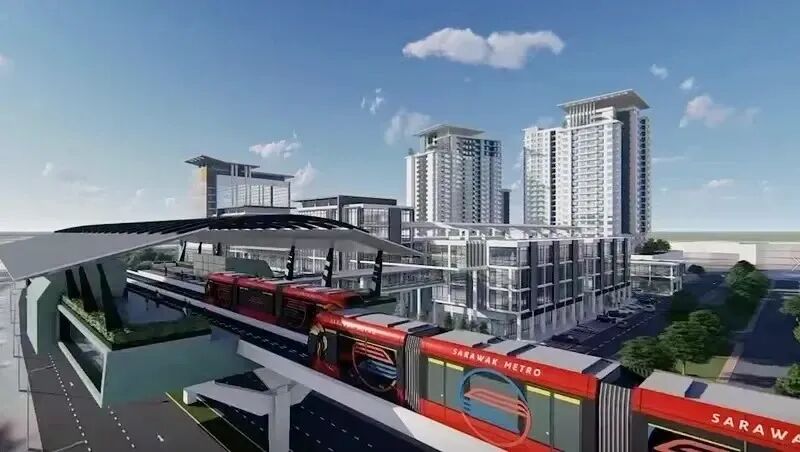
Project Type: Urban Intelligent Rail Transit System (ART Smart Rail, including bridges and stations)
GETO Products: Infrastructure formwork – Bridge construction solutions (concrete T-beams, capping beams, parapet panels, portal structures, precast capping beam shells, etc.)
Project Overview
In Kuching, the capital of Sarawak, Malaysia, a modern urban transportation system is rapidly taking shape. As the first smart rail project in the region, the Kuching Urban Transportation System (KUTS) ART Smart Rail line will become a major transport artery connecting the north and south of the city. The total length of the project is 70 km. The first phase includes 3 main lines and 31 stations, requiring large‑scale production of irregular precast components.
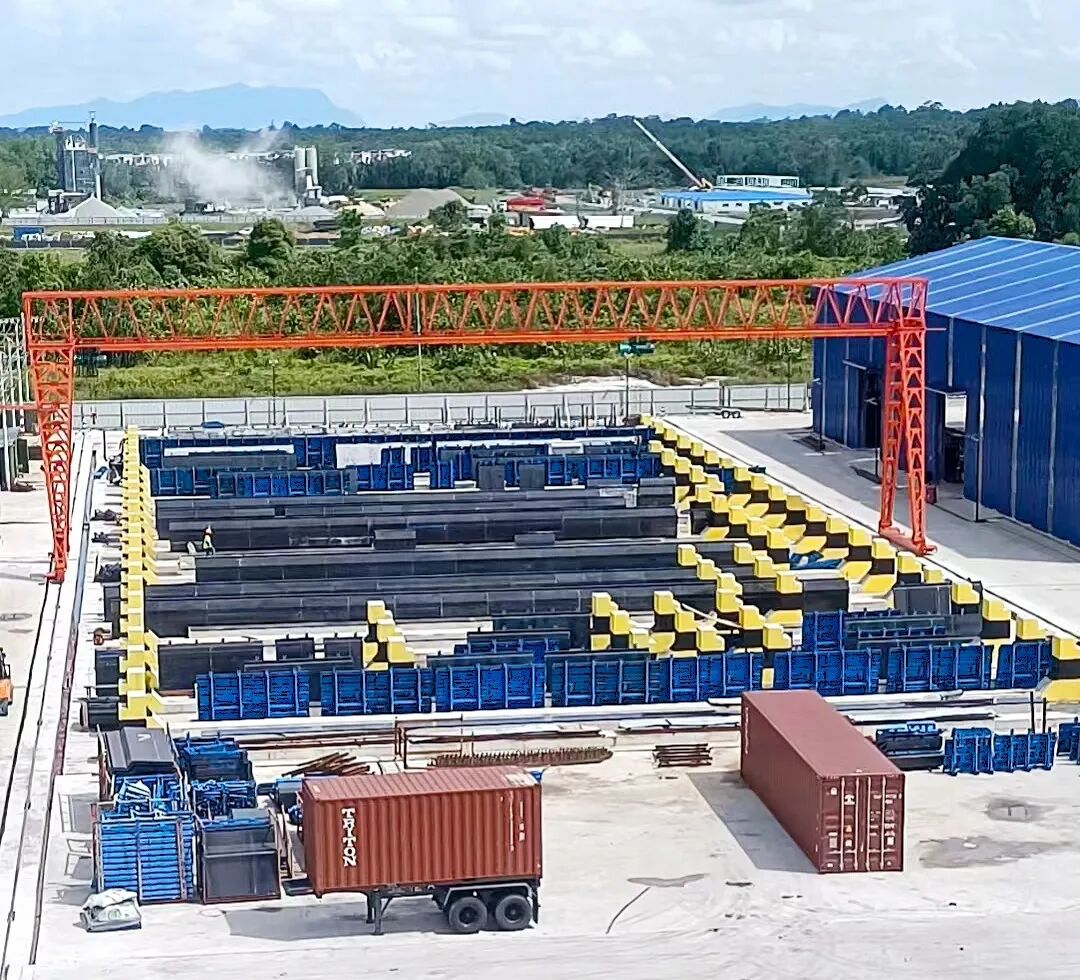
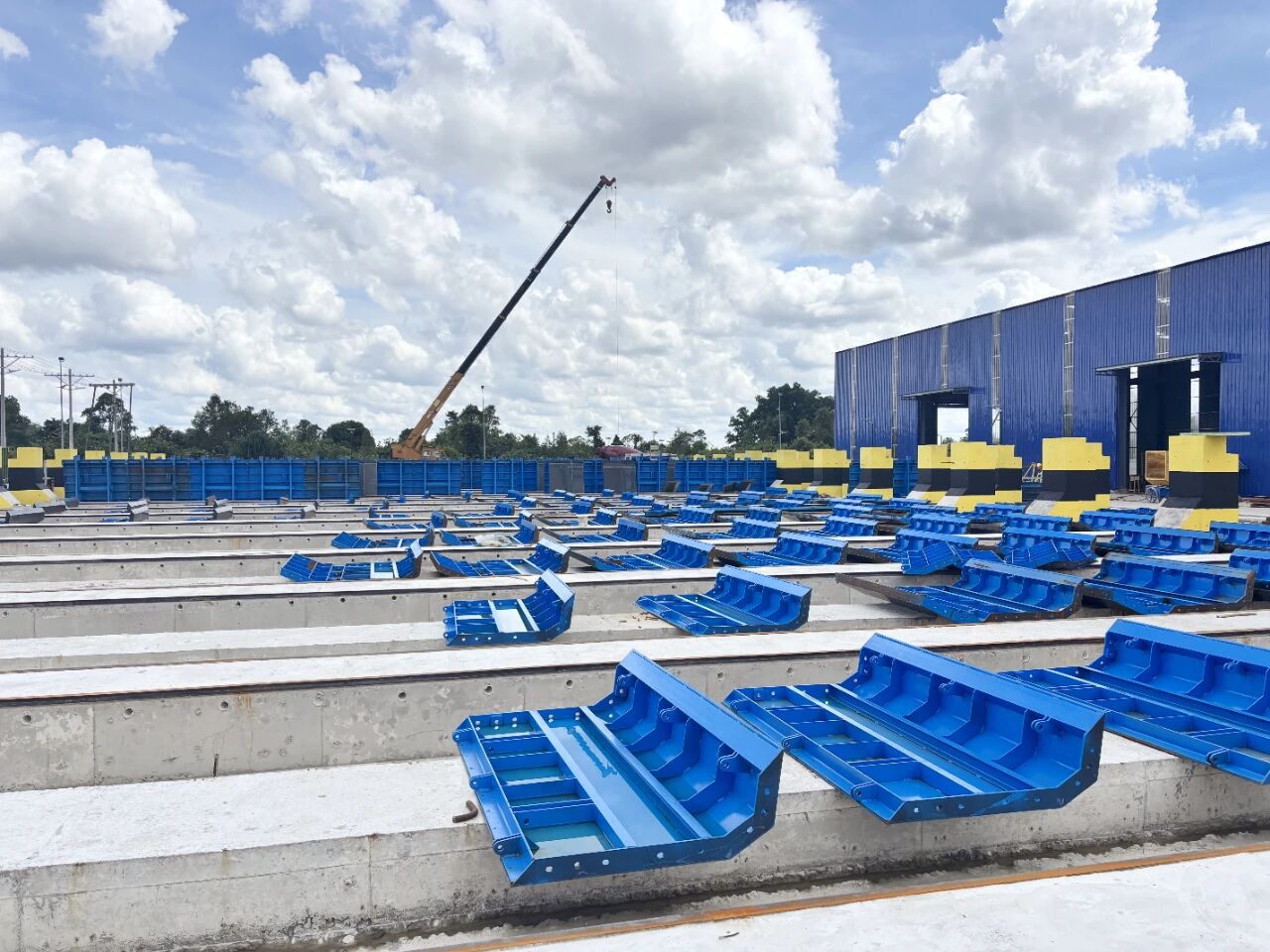
Leveraging its leading precast technology and extensive overseas project experience, GETO provided steel formwork for precast concrete T‑beams, capping beams, parapet panels, portal structures and other bridge components. GETO is responsible for the Red Line and Blue Line under construction. The Red Line mainly adopts precast component formwork construction, while the Blue Line uses a combination of precast and cast‑in‑situ methods (including formwork for pile caps, columns and capping beams).
Project Characteristics
1. Large number and high complexity of irregular components
The project features T‑beams, U‑beams and capping beams intersecting at angles ranging from 62° to 110°, placing extremely high demands on the adaptability and precision control of the formwork system. Conventional standard formwork cannot meet the production requirements for multiple beam types and various angles.
2. High technical difficulty of precast capping beam shells
As the core load‑bearing component of the ART bridge, the precise installation of precast capping beam shells directly affects the overall structural safety and service life of the project. During construction, the trial precast capping beam shell faced three major technical bottlenecks:
- Precasting thin‑shell components without internal formwork
- Lifting lug installation accuracy
- Integrated positioning with pier columns
3. Different construction methods for two lines
The Red Line and Blue Line adopt different construction approaches: the Red Line focuses on precast component formwork, while the Blue Line uses a combination of precast and cast‑in‑situ (including pile caps, columns and capping beam formwork). The formwork system must accommodate both methods while ensuring high turnover efficiency.
GETO Solution
1. Modular steel formwork system
To address the complex working conditions, GETO’s R&D team developed an innovative modular steel formwork system:
- Unique clamp connection design allows standardised formwork units to be flexibly combined
- The system “breaks the formwork into smaller units” to precisely meet the production needs of various beam types (T‑beams, U‑beams, capping beams) and different skew angles (62°–110°)
- Effectively solves the formwork challenges posed by diverse beam types, greatly improving construction efficiency while maintaining quality
2. Breakthrough of three technical bottlenecks
Recently, the trial precast capping beam shell produced using GETO’s dedicated steel formwork system was accurately positioned with dual‑crane coordination, successfully overcoming:
- Precasting without internal formwork – by optimising the steel formwork structure, thin‑shell components can be formed without internal moulds
- Lifting lug installation – precise positioning of lifting lugs ensures safe and balanced lifting
- Integrated positioning with pier columns – achieves seamless connection between the capping beam shell and pier columns, ensuring structural integrity
This breakthrough marks significant progress in the construction of the bridge’s core load‑bearing structure, laying a solid foundation for efficient progress along the entire line.
3. In‑depth technical service and collaboration
GETO’s technical team was deeply involved throughout the project:
- Solution optimisation – close communication with the client, active participation in on‑site construction design
- Integrated detailed design – using industrial 3D design software for product‑level integrated detailing
- On‑site collaboration – deployment of engineer teams to work alongside local construction personnel, effectively reducing on‑site adjustment time
- Efficient turnover – creating favourable conditions for high‑efficiency formwork turnover, strongly supporting project progress
Project Value
1. Successful practice of “technology export + local collaboration”
The Kuching Urban Transportation System project represents another major breakthrough for GETO in the high‑end infrastructure sector of Southeast Asia, marking the successful implementation of the group’s “technology export + local collaboration” model. Through the efficient application of the steel formwork system and precise forming of irregular components, GETO has not only validated its technical advantages in complex formwork, but also gained international recognition through its practical “China Construction” capabilities.
2. Industry demonstration significance
The modular steel formwork system and the breakthrough of the three technical bottlenecks for precast capping beam shells provide a replicable technical path and product solution for similar ART projects, promoting industry progress in precast assembled bridge formwork technology.
3. Economic benefits and brand value
The smooth implementation of the project has effectively improved construction efficiency, reduced on‑site adjustment costs, and ensured the timely opening of the Kuching urban transportation system. At the same time, it has further consolidated GETO’s brand influence in the Southeast Asian infrastructure market.
Leveraging the strong capabilities and brand influence of a listed company, along with years of experience in global expansion, extensive market coverage, and mature cross-border operational capabilities, GETO has established 12 major production bases worldwide and registered the “GETO®” international trademark in 32 countries and regions. Its products are sold to more than 60 countries and regions, including Southeast Asia, South Asia, the Middle East, Central Asia, Africa, South America, Australia, Europe, and North America, as well as Hong Kong, Macao, and Taiwan. The company consistently adheres to its brand philosophy of “Set industry benchmark, create world-renowned brand,” and insists on the high standard of “benchmark demonstration projects” for every project. By delivering “high-quality” products and services, it provides comprehensive “1+N” system solutions for green, new, intelligent buildings, fully creating value for its customers.