
Project Location: Qingduo Town, Bomi County, Tibet Autonomous Region, China
Project Type: Plateau Cable-Stayed Bridge Project
GETO Product: Aluminium Formwork System (for cast-in-situ box girder internal formwork)
Project Overview
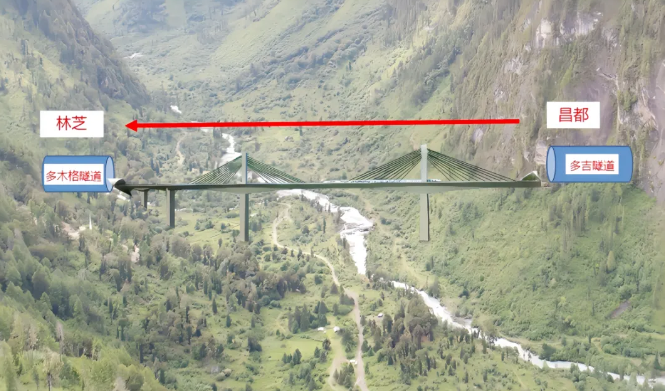
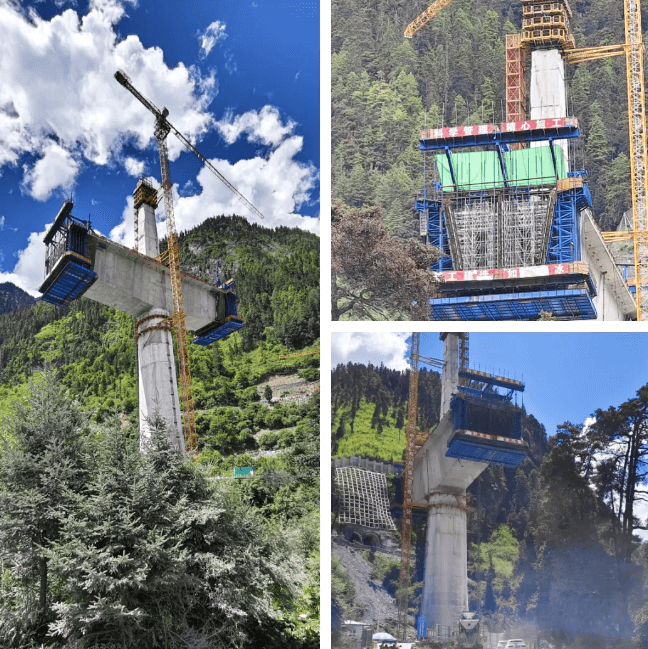
The Rangdaqu Bridge is located in Qingduo Town, Bomi County, Tibet, at an altitude of approximately 3,200 metres, situated in the high mountain and gorge area on the left bank of the Yarlung Tsangpo River. The bridge has a total length of 598.2 metres. The main bridge adopts a low-tower cable-stayed design with a pier-girder strengthening system, with span arrangement of 124 m + 246 m + 124 m. It serves as an important connection between the Duoji Tunnel and the Domuge Tunnel. The main bridge tower stands 47 metres high above the deck, and the approach bridge consists of two 44-metre continuous T‑beam spans. Construction must adapt to the complex mountainous terrain of the Yarlung Tsangpo River basin.
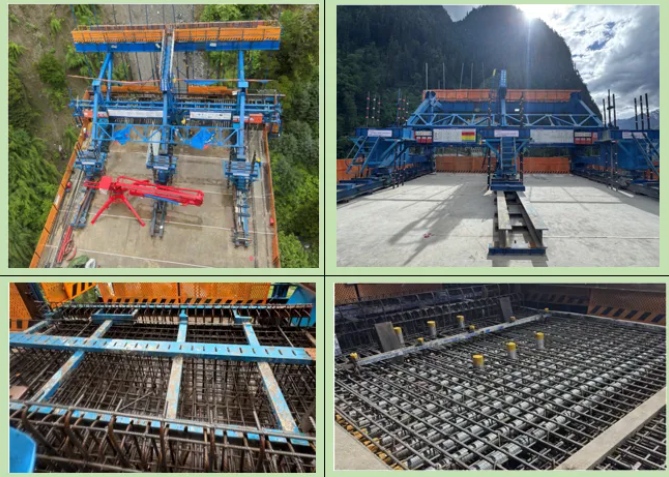
GETO is responsible for the construction of the cast-in-situ box girder internal formwork, providing a customised aluminium formwork solution. The entire bridge is divided into 30 construction segments, with GETO supplying the internal formwork starting from Segment No. 8. By July, the first segment of the cable‑stayed bridge was successfully completed; by early September, the installation of the first box girder internal formwork was fully finished.
Project Characteristics
The construction of this project faces multiple challenges, mainly in the following aspects:
1. Extreme high‑altitude environment
The project site is at 3,200 metres altitude, with low oxygen levels, large temperature differences between day and night, and changeable weather conditions (strong ultraviolet radiation, sudden snowstorms, etc.). These impose extremely high demands on personnel efficiency and equipment stability. Mechanical power decreases, physical exertion increases significantly, and construction organisation is far more difficult than in low‑altitude areas.
2. Complex internal structure of the box girder
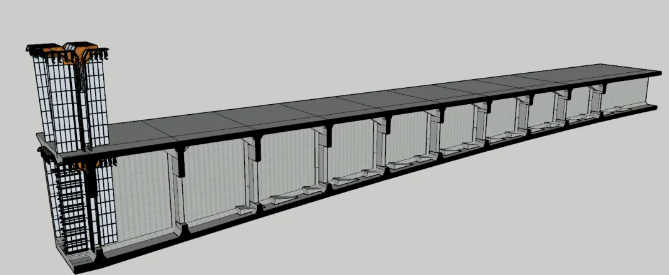
The box girder contains dense diaphragm walls and cable‑stay anchorage zone walls, making the structure highly complex. Traditional slipforming methods cannot be applied — slipforming requires continuous, unobstructed cross‑sectional changes, whereas the dense walls break this continuity. Therefore, only sectional assembly can be used for the internal formwork construction, segment by segment.
3. Stringent requirements for the formwork system
Because sectional assembly is used, the formwork system must have:
- High assembly flexibility – for rapid assembly, disassembly, and adjustment in confined spaces;
- High material strength – to withstand concrete lateral pressure and construction loads;
- Lightweight performance – to reduce reliance on manual handling and hoisting at high altitude, improving safety and efficiency.
4. Many construction segments and high coordination demands
The bridge has 30 segments, with internal formwork intervention starting from Segment 8. It must be closely coordinated with external cantilever casting, prestressing tensioning, and other processes. The movement, installation, and removal of formwork must synchronise with the construction rhythm, placing high demands on timely supply and on‑site technical service capability.
5. Complex mountainous terrain
The bridge site is located in a high mountain and gorge area, with narrow site conditions, poor transport roads, and restricted access for large equipment. This further increases the difficulty of formwork material selection and site organisation.
GETO Solution
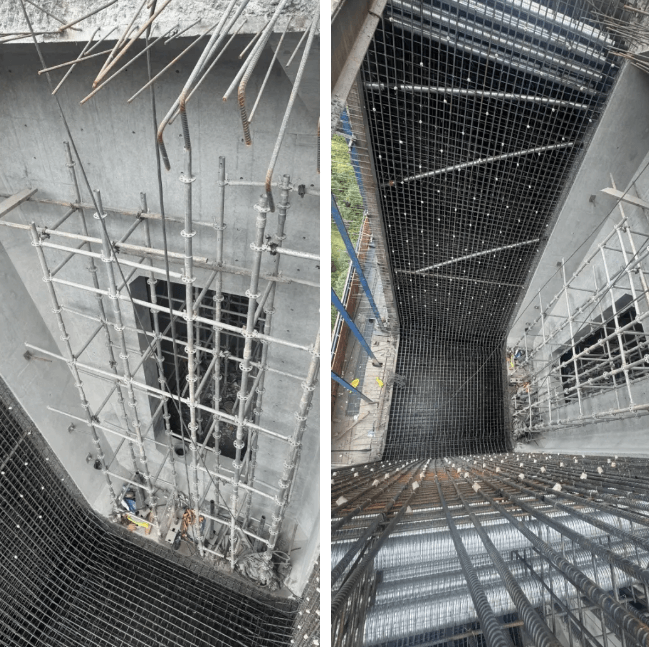
GETO provided a customised aluminium formwork system specifically for the cast‑in‑situ box girder internal formwork, covering side forms, internal diaphragm wall forms, and cable‑stay anchorage zone forms.
The core advantages of this aluminium formwork solution include:
- Lightweight design: Aluminium formwork weighs about one‑third of steel formwork, effectively reducing manual handling and on‑site assembly difficulty at high altitude, decreasing reliance on large hoisting equipment, and adapting to narrow site conditions.
- High strength and stability: Through optimised cross‑section design and waling layout, the formwork system maintains rigidity and load‑bearing capacity while being lightweight, reliably withstanding concrete casting loads.
- Flexible assembly performance: Addressing the challenge where dense diaphragm walls make slipforming impossible, the aluminium formwork uses a modular, detachable design that allows sectional assembly and disassembly in confined spaces, progressing segment by segment — perfectly replacing the slipforming process.
- Green and sustainable: Aluminium formwork can be reused many times, reducing timber consumption and construction waste, meeting green construction requirements in ecologically sensitive plateau areas.
In actual construction, GETO’s aluminium formwork internal system started from Segment 8, progressing through installation, casting, stripping, and transferring to the next segment, effectively ensuring concrete forming accuracy and surface quality in the dense diaphragm wall areas.
Project Value
The Rangdaqu Bridge project fully demonstrates GETO’s comprehensive technical strength and execution capability in high‑altitude, complex‑structure bridge engineering.
- Product application expansion: The successful application of aluminium formwork from conventional building structures to the box girder internal formwork of a plateau cable‑stayed bridge verifies the adaptability and reliability of aluminium formwork for special bridge components.
- Customised solution capability: Addressing the construction bottleneck where dense diaphragm walls prevented slipforming, GETO provided a segmental‑assembly, lightweight, high‑strength aluminium formwork system, achieving a technical breakthrough of “replacing steel/wood with aluminium”.
- Extreme environment execution capability: At 3,200 metres altitude, with low oxygen and variable climatic conditions, GETO completed formwork supply, installation guidance, and construction coordination from Segment 8 onward, ensuring the smooth achievement of key milestones.
- Replicable technical path: This project provides a replicable and scalable comprehensive product solution for similar bridge projects in China’s plateau regions (high altitude, gorge terrain, box girders with dense diaphragm walls).
Furthermore, leveraging its listed company strength, 12 global production bases, and an international business network covering more than 60 countries and regions, GETO is able to provide stable product delivery and on‑site technical support for plateau and overseas infrastructure projects.
With the strong foundation of a listed company, global brand influence, and years of international project experience, GETO maintains extensive market coverage and mature cross-border operational capabilities. The company operates 12 production bases worldwide, holds the “GETO®” international trademark in 32 countries and regions, and exports products to over 60 countries and regions, including Southeast Asia, South Asia, the Middle East, Central Asia, Africa, South America, North America, Europe, Oceania, as well as the Chinese regions of Hong Kong SAR, Macao SAR and Taiwan.
Upholding its brand philosophy of “Setting industry benchmarks, creating a world-class brand,” GETO delivers high-quality products and services, providing a “1+N” comprehensive system solution for green, intelligent construction and maximizing value for clients.